TutorMe: AI English Learning
- 4.5
- Rating
- 100.00K
- Installs
- Free
- Price

 Analysis by App-foxy
I spent time with TutorMe: AI English Learning as an everyday English practice app rather than treating it like a traditional course. That distinction matters. Its central idea is conversation: instead of moving mainly through grammar pages or vocabulary cards, you practice expressing yourself in English through chat-style interaction. For learners who understand more English than they comfortably speak, that can make practice feel less intimidating and easier to fit into a normal day.
This is an education app from Generous Tech Inc., and it is available free of charge. That makes the decision to try it fairly simple, especially for someone who wants to test conversational practice without committing to a paid class. The app is marked for Everyone, runs on Android 7.0 or later, and its current version is 1.2.0. It has reached over one hundred thousand installs and holds a 4.5 average from around two thousand ratings, which suggests that the basic approach is connecting with a meaningful group of learners.
How TutorMe fits into real English practice
The most useful way to think about TutorMe is as a low-pressure speaking and writing companion. It is not the same as sitting with a teacher, attending a live lesson, or following a complete textbook syllabus. Its strength is the moment when you have a few minutes and want to form English sentences instead of merely recognizing them.
You May Also Like

 Blood Strike: 2.5 Anniversary
Blood Strike’s Loadouts Turn Every Drop Into a Tactical Gamble
A close look at Blood Strike’s custom loadouts: how fast access to signature weapons reshapes its battle royale rhythm, rewards preparation, and narrows the gap between fights.

 Pandora - Music & Podcasts
Pandora’s Music Is Easy to Start, but Harder to Recover
Pandora’s strength is its low-effort path from a seed to a station. Its weak spot is how much confidence it asks you to place in connection, setup, and quiet recovery.

 8 Ball Pool
 Is Built on Rivalries, Rematches, and Routine
A close look at the rivalries, rematches, shared routines, and unanswered safety questions that turn a quick pool match into a persistent mobile community.

 Samsung Music
’s Quiet Strength Is Playing What You Already Own
Its reach comes less from spectacle than from dependable access to a personal library. That simplicity is both the app’s strongest retention engine and its ceiling.

 AccuWeather: Weather Radar
AccuWeather Review: A Quick, Clear Forecast for Everyday Decisions
For everyday plans, the best forecast is the one you can understand quickly. AccuWeather makes rain timing, radar, and local conditions easy to act on, with a few trade-offs.

 Hill Climb Racing
Why Hill Climb Racing Still Turns Crashes Into One More Run
A tiny car, a bumpy hill and one more upgrade: Hill Climb Racing keeps resurfacing because its simple chaos makes every near-miss feel personal.
More From Our News Desk



I found the chat format especially relevant for learners who freeze when they need to answer quickly. A conversation gives you a reason to choose words, arrange them, and continue an exchange. Even when the subject is simple, that active recall is different from tapping the correct answer in a quiz. You are practicing the part of English that often disappears when a real conversation begins.
The app’s store summary points toward improving through regular chatting, but I would interpret that promise sensibly. A few weeks of casual use may help you become more willing to produce English and notice recurring mistakes, but it should not be treated as a complete route to fluency. Progress depends on how actively you respond, whether you review what you wrote, and whether you also listen to natural English outside the app.
That makes the app most interesting for intermediate learners and confident beginners who already know some basic words and sentence patterns. If you cannot yet understand simple prompts, a structured beginner course may be a better starting point. If you can follow everyday English but hesitate to answer, the conversational focus becomes much more relevant.
What the free access means for value
The clearest financial advantage is that TutorMe is free to use. I can recommend trying it without asking you to make a purchase decision first. For a learner comparing it with private tutoring, classroom lessons, or paid language platforms, that changes the risk completely: you can see whether the chat-based method suits your habits before spending money elsewhere.
Free access also affects how I judge the app. I do not expect it to replace a personal teacher in every situation. A teacher can adapt a lesson to a learner’s exact pronunciation, explain a confusing grammar point in several ways, and notice problems that a chat exchange may not address. TutorMe earns its place by making practice available and approachable, not by matching every part of one-to-one instruction.
For someone who only needs a short daily prompt to stay engaged with English, free availability may be enough value on its own. For someone preparing for an exam, an interview, or a professional presentation, the app is better viewed as one practice layer rather than the entire preparation plan. The free price removes the financial barrier, but it does not remove the need for a suitable learning strategy.
I also appreciate that the app’s value is not tied to owning a large collection of course materials. You can approach it when you have a practical reason to use English: preparing to describe your weekend, rehearsing how to ask for help, or simply trying to keep a conversation moving. That immediacy can be more useful than opening a large course and spending several minutes deciding which lesson to begin.
A realistic routine for using it well
Imagine that I am commuting home and have ten quiet minutes. Instead of scrolling through a vocabulary list, I open TutorMe and answer in English about what happened during my day. I try not to translate every sentence in my head first. When I get stuck, I use simpler words and keep the conversation moving. Afterward, I reread my replies and choose one sentence that I would like to say more naturally next time.
That last step is important. Chatting alone can become a stream of disposable answers, but reviewing one or two sentences turns the exchange into a small lesson. I would keep a note of repeated problems, such as missing articles, confusing past and present tense, or relying on the same basic adjective. The app becomes more valuable when I use those observations to guide the next conversation.
A second useful routine is to prepare before a specific event. If I expect to speak with a hotel receptionist, a colleague, or a new neighbor, I can practice the vocabulary around that situation. I would not assume the app can guarantee the exact wording another person will use, but rehearsing the general purpose of the conversation can reduce the fear of starting.
There is also a practical distinction between typing quickly and communicating clearly. I would sometimes write a response slowly, then write it again using fewer words. This helps reveal whether I am depending on complicated sentences when a simple sentence would work better. That is a concrete benefit of chat practice: it gives me space to experiment before facing the pressure of a live exchange.
Where the conversational approach works best
TutorMe’s strongest use case is building a bridge between passive knowledge and active communication. Many learners can recognize a phrase in a lesson but cannot produce it when asked a question. A conversation forces a choice. Even an imperfect answer gives you practice with retrieving language under a small amount of pressure.
The format can also help people who dislike speaking in front of others. There is no classroom audience in the experience, so a learner can try a sentence without worrying about a visible mistake. That does not replace speaking aloud, but it can be a gentler first step for someone who avoids practice because embarrassment gets in the way.
I would use it alongside listening, not instead of listening. Chat can help me construct sentences, but it does not automatically train my ear for different accents, fast speech, interruptions, or background noise. After a chat session, I would add a short piece of English audio and try to summarize it. This combination covers two different weaknesses rather than expecting one app to solve both.
The same principle applies to pronunciation. A learner may write excellent answers and still struggle to say them naturally. TutorMe can support the wording stage, but I would read selected responses aloud and record myself separately if pronunciation is a priority. That trade-off is easy to miss when an app makes written practice feel smooth.
Small habits that make the app more effective
My first tip is to avoid turning every exchange into a translation exercise. If I stop to translate each word, I spend more time managing my tools than communicating. I would first attempt the idea with the English I already know, even if the sentence is plain. The goal is to become flexible, not to produce a perfect literary answer every time.
My second tip is to vary the difficulty of my replies. Some turns should be short and quick, while others can include a reason, an example, or a comparison. This prevents practice from becoming a repeated pattern of one-sentence answers. It also exposes whether I can connect ideas rather than only respond to isolated questions.
My third tip is to use the chat as a record of personal language gaps. If I repeatedly need the same word, I would not simply memorize a translation. I would write two new sentences using it in different contexts. That makes the vocabulary more useful and helps me discover whether I understand the word’s tone and grammar.
A fourth tip is to finish with a spoken recap. After a session, I would explain the topic aloud without looking at the chat. This reveals the difference between recognizing my written answer and being able to produce the idea independently. It is a simple way to push the app beyond passive correction or comfortable typing.
The trade-offs I noticed
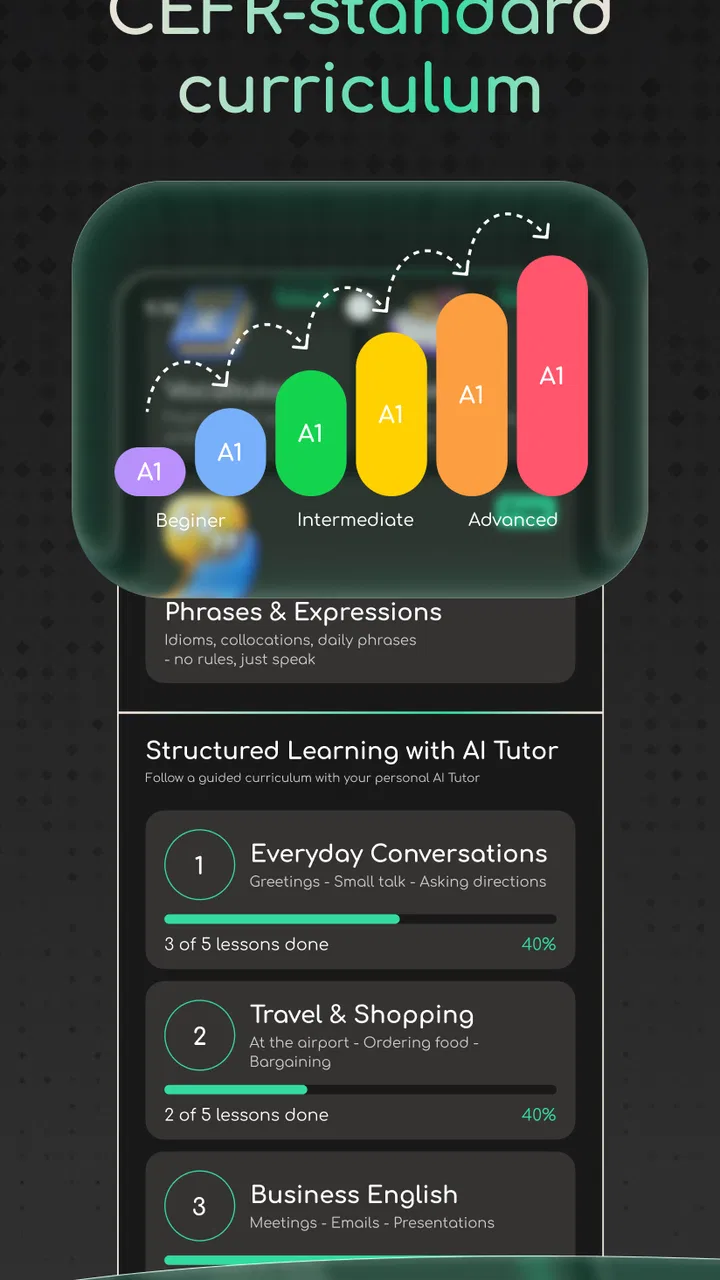
The conversational design is approachable, but it may feel too open-ended for learners who want a clearly ordered curriculum. A traditional language course usually tells you what to study next and may separate grammar, vocabulary, listening, and review into defined stages. TutorMe is more flexible, yet that flexibility puts more responsibility on me to decide how to practice and what to revisit.
That matters for people who lose motivation when there is no visible lesson path. If I open the app without a personal goal, I might enjoy a short exchange but struggle to know whether I am improving in a balanced way. I would recommend setting a narrow target, such as answering with complete past-tense sentences or practicing polite requests, instead of expecting the app to organize every part of learning automatically.
There is also a difference between an AI conversation and a human conversation. An AI can offer a comfortable space for experimentation, but real people interrupt, misunderstand, use slang, change topics, and speak with different rhythms. Anyone who needs English for work, travel, or social life should eventually practice with humans too. TutorMe is particularly useful before that stage, or between real conversations.
Another limitation is that chat-based confidence can become misleading if I never say the sentences aloud. Writing gives me extra time to think, edit, and correct myself. That is valuable, but it is easier than speaking. I would therefore judge my progress by whether I can answer aloud after using the app, not only by whether my typed replies look better.
The app is also not my first choice for a learner who needs detailed grammar teaching. If I want a full explanation of conditionals, a carefully sequenced pronunciation course, or exam-specific exercises, a specialized resource may offer more depth. TutorMe can help me use grammar in context, but contextual practice and systematic instruction are different needs.
Who is likely to get the most from it?
I would recommend TutorMe to an adult learner who knows basic English but rarely gets a chance to use it. It suits someone who can spare short periods during the day and prefers conversation over worksheets. It is also a sensible option for a shy learner who wants to rehearse ideas privately before speaking with other people.
It may work well for travelers who want to practice practical situations, remote workers who need more confidence in everyday messages, and students who understand classroom material but hesitate during spontaneous answers. In each case, the benefit comes from turning knowledge into active responses.
I would be more cautious about recommending it as the only app for a complete beginner. If a learner needs the alphabet, basic pronunciation guidance, or carefully introduced sentence structures, a foundational course is likely to provide clearer support. TutorMe becomes more useful once the learner has enough language to participate rather than merely decode isolated words.
I would also suggest looking elsewhere for advanced learners who need specialized vocabulary or demanding feedback. A professional preparing for legal negotiations, medical communication, or a high-stakes language exam needs targeted material and expert correction. The app can still be a warm-up, but it should not carry the full responsibility for accuracy in those settings.
Families should find the Everyone age rating reassuring in terms of the app’s stated audience classification, but I would still choose activities based on the learner’s actual level. A younger learner may enjoy chat practice, while another may need visual explanations and shorter, more structured exercises. The label does not make the same learning approach ideal for every age or ability.
How it compares with usual alternatives
Compared with flashcard apps, TutorMe asks me to do more than recognize a word. Flashcards are excellent for spaced repetition and quick vocabulary review, especially when I need to memorize a defined list. TutorMe is better when I need to decide how a word fits into a sentence and keep an exchange going. I would use flashcards for storage and chat for retrieval in context.
Compared with grammar workbooks, the app feels more immediate. A workbook can explain rules with precision and provide controlled exercises, while a conversation shows whether I can use a structure when the answer is not already suggested. The trade-off is that a workbook gives me a clearer map. If I repeatedly make the same grammar mistake, I may need to consult a dedicated explanation rather than simply continue chatting.
Compared with language-exchange communities, TutorMe offers a less demanding starting point. I do not have to coordinate schedules, worry about being judged by a partner, or divide my time between two languages. Human exchanges provide richer unpredictability and cultural context, though, so I would move toward them once I feel ready.
Compared with private tutoring, the free app is obviously easier to access and more convenient for casual practice. A tutor remains stronger for personalized correction, accountability, and adapting lessons to a specific goal. My choice would depend on the problem: I would choose TutorMe to build a daily habit, and a teacher when I need diagnosis, structure, or high-stakes preparation.
Practical questions before starting
Can it replace a complete English course? In my view, no. It is best as a conversational practice tool, particularly for producing language and becoming less hesitant. I would pair it with listening, pronunciation work, reading, and structured grammar study if I wanted broad progress.
Is it worth trying if I am unsure about AI learning? Yes, because the free price makes experimentation straightforward. I would use it for several focused sessions rather than judging it after one casual chat. The important test is whether it helps me answer more readily and whether I can transfer those answers into spoken practice.
How much time should I spend with it? I would favor consistency over long sessions. A brief exchange followed by review can be more useful than opening the app once a week and rushing through many replies. The right amount depends on my schedule, but every session should have a purpose: fluency, vocabulary, a situation, or correction.
What should I do when the app does not explain a mistake clearly enough? I would record the sentence, compare it with a trusted grammar reference, and then try a corrected version in a new context. That workflow prevents uncertainty from becoming a habit. It also recognizes the app’s role as practice rather than as the sole authority for every language question.
Does the latest release matter? The current version is 1.2.0, so I would keep the app updated through the normal store process and judge the experience I actually receive on my device. Since Android 7.0 is the minimum requirement, many older Android phones should be eligible, although day-to-day comfort will still depend on the device itself.
My final recommendation
After using TutorMe as a conversation-focused learning companion, I see its value in reducing the distance between knowing English and attempting to use it. The free access is a genuine advantage: there is no purchase barrier to testing whether chat practice fits your personality and routine. Its 4.5 average from around two thousand ratings also gives it a credible starting point for people deciding what to try first.
I would recommend it to learners who need regular, low-pressure opportunities to form English responses. Use it with a specific goal, review a few sentences after each exchange, and speak those sentences aloud. Those habits turn a casual chat into deliberate practice and make the app more useful than its simple premise might suggest.
I would skip it as a sole solution if you need a complete beginner curriculum, detailed expert correction, exam preparation, or serious pronunciation training. In those situations, a structured course, teacher, or specialized resource will be a better main choice. TutorMe can still fill the gaps between lessons, but it should not be asked to do every job.
My buy-or-skip verdict is simple: try it if you want free conversational practice, and skip it only if your main need is a tightly sequenced course or human feedback. For the right learner, TutorMe: AI English Learning is a practical way to make English an active part of the day instead of something studied only when a formal lesson begins.
FAQs for TutorMe: AI English Learning
01What is TutorMe: AI English Learning, and who is it designed for?
TutorMe: AI English Learning is an AI-powered language practice app designed for people who want to improve their English through guided exercises and interactive conversations. It can be useful for beginners, intermediate learners, students, travelers, and professionals who need extra practice outside a classroom. The app generally focuses on building confidence in speaking, vocabulary, grammar, and everyday communication at a flexible pace.
02How does the AI English tutor work in practice?
The app uses artificial intelligence to simulate a personal English tutor. Depending on the available features, you may be able to chat with the AI, answer questions, practice common situations, and receive corrections or suggestions. This makes it convenient for short daily sessions, although users should remember that AI feedback may occasionally be imperfect and should not be treated as a complete replacement for a qualified teacher.
03Can TutorMe help improve speaking and pronunciation, or is it mainly for text exercises?
TutorMe may support several types of English practice, but the exact speaking, listening, and pronunciation tools can depend on your device, app version, and subscription plan. If voice conversations or pronunciation feedback are available, they can help you practice more naturally and reduce hesitation. Before downloading, check the current store description and permissions to confirm which audio features are included.
04Is TutorMe: AI English Learning free to download and use?
The application may be available to download at no initial cost, but some lessons, advanced AI conversations, personalized feedback, or usage limits may require a subscription or in-app purchase. Pricing and trial conditions can vary by platform, country, and promotion. Review the payment screen carefully before starting a trial, especially the renewal date and cancellation terms, to avoid unexpected charges.
05Does TutorMe replace an English teacher or a complete language course?
TutorMe can be a practical supplement for regular English practice, particularly when you need immediate conversation prompts or quick explanations. However, it may not provide the same structure, cultural guidance, accountability, or personalized correction as a professional teacher. For the best results, combine the app with reading, listening, real conversations, and a structured course that matches your learning goals.
Pros
- Personalized lessons adapt to your English level and learning pace.
- AI feedback helps identify grammar
- vocabulary
- and pronunciation mistakes.
- Short practice sessions fit easily into busy daily routines.
- Useful progress tracking makes learning goals easier to monitor.
- Covers practical English for travel
- work
- and everyday conversations.
Cons
- Some advanced features may require a paid subscription.
- AI corrections can occasionally miss context or sound unnatural.
- Reliable internet access is needed for most lessons and feedback.
- Practice may feel repetitive after extended daily use.
- It offers less interaction than learning with a live English tutor.

TutorMe: AI English Learning
Gallery